Underfloor heating

Underfloor heating is a modern and energy-efficient way to warm your home. It’s cleaner, more sustainable, and can help lower carbon emissions.


How it works

Low temperature hot water moves through pipes under your floor. It heats the space evenly and quietly. Unlike radiators, heat is distributed slowly and evenly across the space.

Underfloor heating works at lower temperatures than radiators. This means it uses less energy, costs less, and makes your home more efficient.

Underfloor heating systems take longer to warm up because they operate at lower temperatures and cover a large area. It may take time to reach your desired temperature. Set the temperature slightly earlier so that rooms are warm when you need them.

The size of your property and the type of floor, such as tiles, wood, or carpet, can affect warm-up times.
Controlling your underfloor heating using a thermostat

To maximise comfort and efficiency, use thermostats to control your heating. Smart thermostats allow for ‘zoning’, meaning you can:

  • Set different temperatures in different rooms/zones
  • Schedule heating to match your daily routine
  • Reduce heating in unused rooms/zones to save energy

Check the instructions from the manufacturer to find your home’s thermostat info. You should have received these when you moved in.
Getting the most out of your underfloor heating

Radiators typically need to be heated to around 65-75°C to heat a room effectively. In contrast, underfloor heating systems usually operate at lower temperatures.

Here are some tips to maximise your comfort levels and efficiency of your underfloor heating system.
Maintain a consistent temperature

It’s more efficient to maintain a constant temperature (between 18-20°C) instead of turning it off and on. This helps maintain warmth and prevents long heat-up times.

Use a thermostat

Use your thermostat to set the temperature slightly earlier so rooms are warm when you need them. Lowering temperatures in unoccupied rooms will reduce energy costs.

Avoid overheating

Underfloor heating works slowly and steadily, so avoid dramatic temperature changes. Heating the system higher than necessary doesn’t warm the space faster but does increase energy consumption.

Use zoned heating

You can set different temperatures in different rooms/zones, each controlled separately. This is efficient as you can heat only the rooms in use, rather than the entire house.

Recommended Temperature Settings

Using your thermostat, you can change the temperatures in different rooms/zones. For example you may want your living area warming than your bedroom. The below temperatures are just a guide and it all depends on your routine, your schedule and your preferred temperature.

Living room

You might often use your living room for relaxation, so maintaining a comfortable temperature during active hours is ideal.

TimeSuggested
temperature
Description
From 5am21°CStart your morning at a comfortable temperature.
From 9am18°CReduce the temperature during the day to save energy when the room is not being used.
From 4pm20°CPreheat the room before you need it for evening comfort.
From 6pm21°CWarmer temperature for relaxation during the evening.
From 9pm20°CLower the temperature at night to save energy.
Overnight18°CMaintain a minimal temperature during the late hours.

Bedroom

You may want a cooler temperature in the bedroom, to promote restful sleep.

TimeSuggested
temperature
Description
From 4am18°CStart your morning at a comfortable temperature.
From 9am16°CReduce the temperature when the room is empty during the day.
From 6pm17°CSet a minimal but comfortable temperature for early evening.
From 8pm18°CWarmer setting for evening relaxation if using the bedroom.
From 10pm16°CCooler temperature for optimal sleep.
From 11pm15°CMinimal setting to save energy during late hours.

How long does it take to heat up?

Underfloor heat-up times vary based on: 

  • The size of the room 
  • The heat-loss and the insulation of the space 
  • The type of floor finish (tiles, wood, carpet)
  • The type of system and its heat source 

How can my underfloor heating be serviced?

All serviceable parts and plumbing joints are located in the manifold above the floor so they are accessible.

Metropolitan recommend that your underfloor system is serviced by a qualified plumber.

Is there something else
we can help with?

How is your bill
calculated?

We aim to make your billing as simple and transparent as possible.


We use the following information to calculate how much you need to pay.

Unit rate

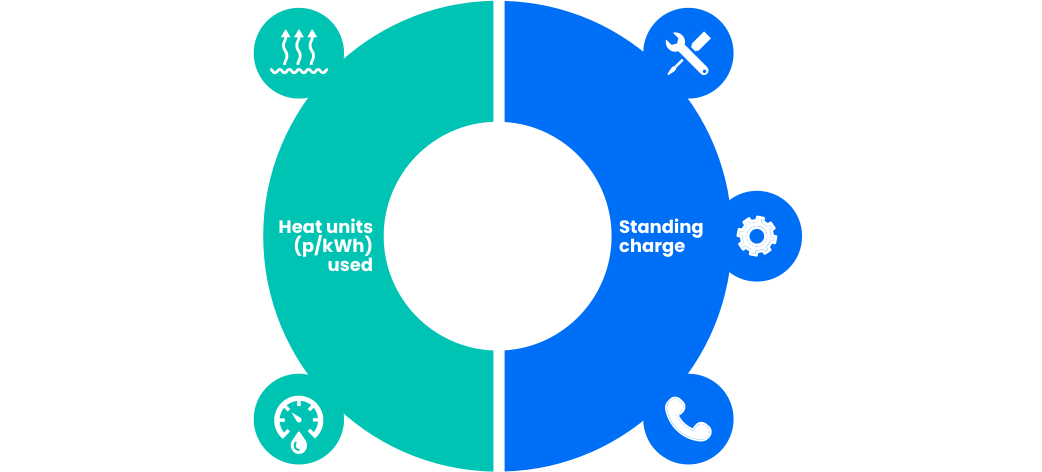
You pay for the heat and hot water you use, which is recorded by your meter and the unit rate (p/kWh) is applied.

Standing charge

This is a daily fee. It helps pay for the maintenance and management of the heat hub and network.

We’ll also apply VAT, the tax you have to pay when you buy goods or services, at the lower rate of 5%.

FAQ’s

Why do I have to pay standing charges?

Why does my bill change from month to month?

What is the ‘Keep-warm’ function?

What are the ways to pay?

Why is my bill higher than expected?

Why hasn’t my payment shown on my account or meter?

Why am I being billed on estimates instead of actual readings?

How do I setup, change, or fix my Direct Debit?

Your bill explained

Your bill provides details on your usage, payments made and due, and more. 
You can also quickly see how your usage changes with the seasons.

Help with paying your bill

We know sometimes it can be hard to find the money to pay for bills. We have ways we can support you. If you need some help, please let us know.

Is there something else
we can help with?

Making
a complaint

We know it can be frustrating and disappointing if our service isn’t as good as it should be. If you’re unhappy with our service, we want to be able to put it right quickly and smoothly.


How you can complain

Send us a contact form

Chat to us live online

By post: Metropolitan, Driscoll 2, Ellen Street, 
Cardiff, CF10 4BP.

We are not active on social media. Therefore we cannot accept complaints via social media.

We’re here to help

We aim to resolve all complaints within 10 working days.

If English isn’t your first language, we’ll find ways to help us communicate better. This may mean it takes a little longer to resolve your questions.

Our Complaints Process

We’re sorry if you’re unhappy with our service. Here’s what will happen next:

  • Let us know about your complaint as soon as possible.
  • We aim to respond to you in 10 working days in the most appropriate way.
  • If we need more time to investigate, we’ll keep you updated and try to reduce any immediate impact on you.
  • If we can’t resolve things straight away, we’ll escalate your complaint internally.
  • You can ask for a manager to review your complaint at any time.
  • If we’re unable to resolve your complaint, we’ll explain our final position. You may receive a “deadlock letter” (or you can request one), confirming we can’t take things further.

If steps one and two have been followed and you’re still unhappy, you can take your complaint to the Energy Ombudsman if:

  • You’ve received a deadlock letter, or
  • 8 weeks have passed since you first made your complaint

The Energy Ombudsman offers a free and independent review, but only after our complaints process has been completed.

The Energy Ombudsman

If you’re not satisfied with how we’ve dealt with your complaint, you can contact the Energy Ombudsman, a free and independent agency that can help.

Telephone: 0330 440 1624

Website: www.energyombudsman.org

Email: [email protected]

In writing: Energy Ombudsman, P.O. Box 966, Warrington, WA4 9DF

Our responsibilities

If you’re unhappy with our service, we promise:

  • We’ll get back to you within 10 working days
  • We’ll pause any actions recover an outstanding balance, if your complaint is about our billing
  • We’ll use any feedback to try and improve our service
  • We’ll thoroughly investigate your complaint to determine what’s happened
  • We’ll identify what the problem is and what caused it
  • We’ll find out how we can resolve the problem
  • We’ll determine if there’s anything we can do to stop the problem from happening again
  • We’ll inform you if any Guaranteed Standards of Service or compensation payment is due
  • We’ll say sorry if we made a mistake and explain what went wrong
  • If your complaint was caused by a company policy, we’ll explain it to you
  • We’ll tell you how to escalate your concerns if you’re unhappy with our response to your complaint

Is there something else
we can help with?

Living on a heat network won’t cost more. We make sure our prices are fair, and we’re transparent about how your bills are calculated.


To view your tariffs, please log in to your account.

Our price promise

Most of your heat (more than 95%) comes from a high‑efficiency air source heat pump, which uses electricity to collect heat from the outside air.

We mainly produce heat at times when electricity is cheaper and has a lower carbon impact, then store it until you need heating or hot water.

Our price promise means you won’t pay more to heat your home than you would if you owned and maintained your own individual air source heat pump*.

*Our price promise is based on the nearest alternative comparator for each network and is based on typical heat consumption in an average home.

All-inclusive price

Enjoy simple, stress-free heating with a clear price:

  • Your bill covers everything – the heat you use, plus repairs, maintenance and replacements
  • No surprise costs for servicing or emergencies
  • No need to worry about breakdowns or big repair bills like with a gas boiler or individual heat pump

It’s heating with total peace of mind — everything taken care of, all in one place

What you can expect

A better, fairer way to pay for heat.

  • Flexible ways to pay that work for you
  • Fair, transparent pricing, guided by Ofgem
  • At least 31 days notice before any price changes
  • Prices reviewed no more than twice a year
  • Clear, easy to understand bills
  • Support if you’re struggling financially

An all-inclusive price

Is there something else
we can help with?

Moving in or
moving out

Moving in

It’s great to welcome you to our low-carbon heat network community.

We’ll need to know

  • The date you moved in
  • The meter readings from when you moved in (if possible)
  • Your full name, date of birth, contact details and full address
  • Your Direct Debit details (or details of how else you would like to pay)

You can find out more information about Direct Debit and our other payment methods here.

With an online account, you can manage your personal details, monitor your usage, and make payments online.

Moving out

Saying goodbye is never easy. We want to make your move smooth, no matter where your next adventure leads you.

You can let us know you’re moving out by logging into your online account or by contacting us.

What we’ll do

  • We’ll agree with you how we’ll get a final meter reading
  • We’ll read your meter on the day of your move, as long as you give us at least two working days’ notice
  • We’ll send you your final bill within five working days of your move date

Switching supplier

Since our heat network is integrated into the community, you can’t switch your heating and hot water supplier. You’re protected by:

  • Our Guaranteed Standards of Service
  • Ofgem regulation
  • Heat Trust registration

Priority Services Register

Join our Priority Services Register for free if you need extra support because of your health, age, disability, or circumstances.

Find out how we can support you if you need extra help.

Is there something else
we can help with?

Your heat
equipment
explained

Low carbon heating in our Community heat hub

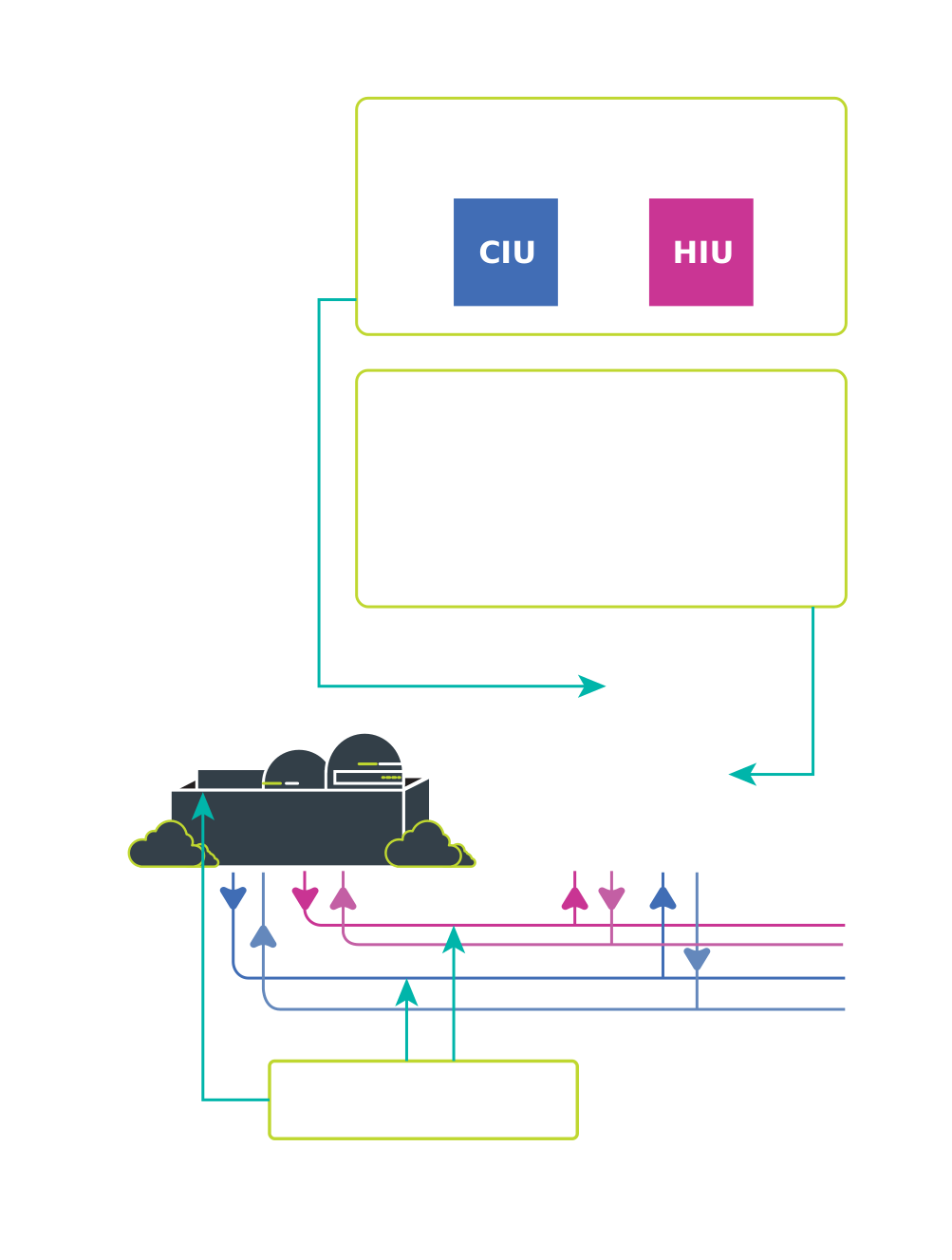
Instead of having a gas boiler in your home, heat is produced centrally and delivered to you through a Heat Interface Unit (HIU).

Your home still heats up just as you’d expect. It’s now cleaner, safer, and ready for the future.

By using a heat network instead of an individual gas boiler:

  • Less carbon is released into the air
  • Homes rely less on fossil fuels
  • Heating can be generated in a more efficient way
  • You don’t have to worry about annual servicing of the boiler

As gas boilers are phased out, our heat networks provide an alternative low‑carbon solution to individual air source heat pumps.


The equipment in your home

Heat Interface Unit (HIU)

The HIU transfers heat from the network into your home, giving you reliable heating and hot water to your radiators or underfloor heating, taps and showers – whenever you need it.

We maintain the HIU every two years so you don’t have to worry about servicing.

Some HIUs also include a “keep warm” function  that maintains regulated water temperatures. For safety reasons, this can’t be switched off – and it’s already included in what you pay.

Thermostat

Your thermostat works just like it always has.

  • Set your preferred temperature with your thermostat
  • Control when your heating comes on and off

You or your landlord are responsible for maintaining this.

Making sure everything runs smoothly

One of the biggest benefits of being on a heat network is peace of mind.

We service your HIU every two years, making sure it’s working efficiently, safely and reliably. We’ll always contact you in advance to arrange a convenient appointment.

  • Inclusive servicing fees
  • No call‑out charges
  • No separate maintenance contracts to arrange

This is all included in the cost you already pay to us.

If you had a traditional gas boiler, you’d usually need to arrange and pay for servicing yourself – on top of your energy bills. With a HIU, that’s one less thing to worry about.

Responsibility of the network

If you notice a problem that means you have no heating or hot water throughout your home, just get in touch. We’re available 24/7 for emergencies.

You may also have Underfloor Heating in your home. Find out more about Underfloor Heating here.

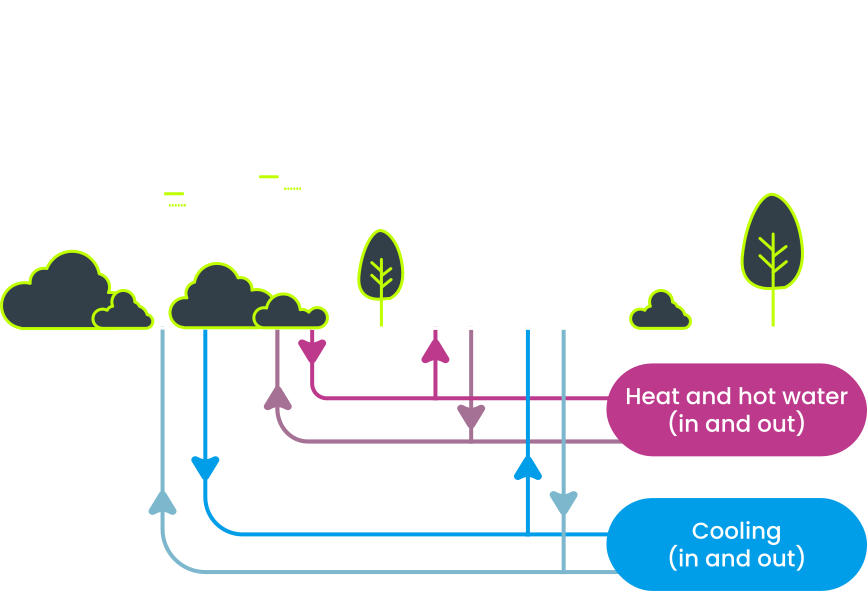
Your home may also be connected to one of our cooling networks. Find out how cooling works and the responsibility of the cooling service.

FAQ’s

What is the ‘Keep-warm’ function?

Who is responsible for servicing and repairs?

How do I submit a meter reading?

Who is responsible for the equipment?

Is there something else
we can help with?

Our guaranteed
service standards

We know you need to be able to rely on us. That’s why we guarantee minimum standards of service. Our standards are aligned with Heat Trust recommendations, although we think we can work harder for you. So, in some cases our promises exceed what the Heat Trust asks us to do.

We’re a proud member of the Heat Trust; an industry body providing consumer protection for residential customers living on heat networks within the UK.


Making appointments

Your account

Payment arrangements

Complaints

If your heating isn’t working

Temperature and flow rate

Standards for cooling

Direct debits and standing orders

Court claims

Exceptions


Is there something else
we can help with?

How are we
regulated?

We want you to feel confident and cared for when it comes to pricing and service – we’re already committed to meeting the highest standard of customer care and fairness.


How you are protected

Ofgem regulates Heat Networks, so you can trust that we’ll always work hard for you. All our networks are registered with Heat Trust, offering you peace of mind and a reliable service.

Heat Trust is a voluntary scheme that protects customers whose homes are connected to a community heat network. It sets clear standards for service and customer care, so you receive fair, transparent, and good-value service.

Find out more information about Heat Trust.

What you can expect from us

We recognise that we are in a position of responsibility and we take this very seriously. Metropolitan has been providing heat to thousands of homes and businesses for many years.

  • Exceptional customer service from our UK-based team.
  • Quick and fair resolution if anything goes wrong. Access to an independent complaint-handling service.
  • Your feedback matters to us. We always aim to improve our service based on your comments.

Is there something else
we can help with?

What are heat
networks?

Cleaner, greener heating for your home

A heat network is a modern way to provide heating and hot water without using gas in your home. Instead of individual boilers, heat is generated at a central location and shared across a community.

This approach is more energy‑efficient, lower‑carbon, and designed to support the UK’s move away from fossil fuels — while still giving you reliable heating and hot water whenever you need it.

Our heat networks create less CO2 than conventional heating systems, delivering

80%

carbon savings from the day they start running*

*compared with an individual gas boiler and working to the Future Homes Standard. These carbon savings apply to our air source heat pump community heat hubs. 


Why being on a heat network is a good thing

Living in a home connected to a heat network brings some clear benefits:

  • No gas boiler in your home
  • Heating and hot water available on demand
  • Lower‑carbon heating that supports the UK’s Net Zero goals
  • Less hassle – servicing and maintenance are taken care of
  • Designed to be future-proof

Low Carbon Now

Our heat networks will deliver carbon savings from the day they start running, by removing the need for individual gas boilers and providing locally sourced heating and hot water.

Zero Carbon Ready

As the electricity grid becomes zero-carbon, so will our heat networks. There’s no need for retrofitting or bolt on technology.

Future Proof

As technologies advance, we can add them to the heat hub making our networks a long-term sustainable solution, with no need for disruptive works later on.

How does a heat network work?

Community Heat Hub

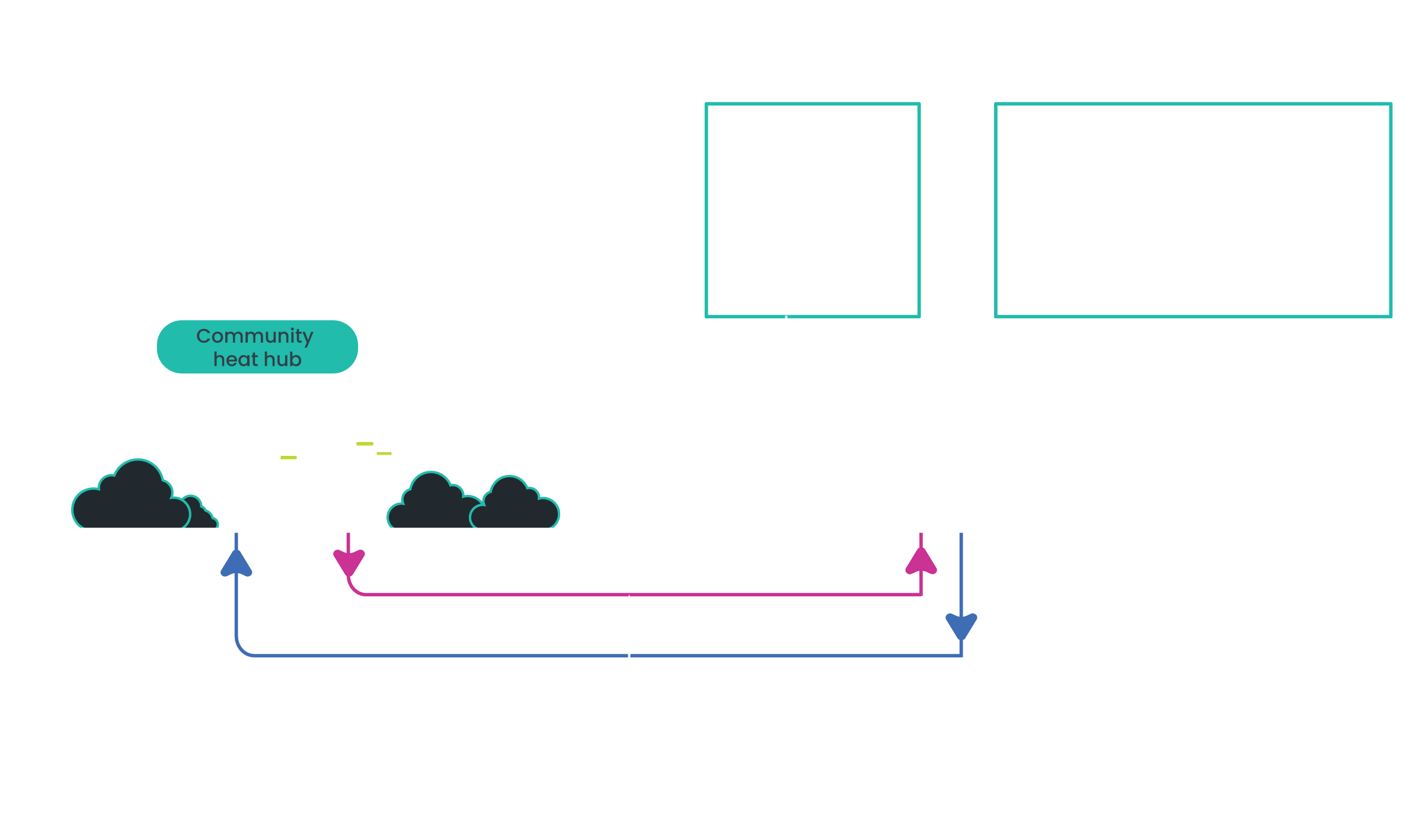
Heat is produced at our community heat hub and delivered to homes through insulated underground pipes.

The heat hub uses electricity to generate low-carbon heat using large air source heat pumps.

Because the system runs on electricity, it will become cleaner as the national grid continues to reduce carbon emissions.

For added reliability, electric boilers provide back‑up so your heating and hot water are always available when needed.

Heat Interface Unit

Each home has a Heat Interface Unit (HIU), a compact unit similar in size to a standard boiler.

The HIU replaces the need for a gas boiler and provides heating and hot water for radiators or underfloor heating, taps and showers.

The built‑in heat meter automatically sends us readings so your bills are based on your actual heat use.

We maintain the heat hub, network and HIU at no extra cost to you.

High Efficiency Heat Network

Heat is delivered to each home as hot water through a highly insulated underground network of flow and return pipes.

Hot water flows continuously through the network, ensuring that heat is ready to be used whenever you turn on your heating or hot water.

Thermal Stores

We use the thermal stores in the community heat hub like a battery, to lower our electricity peak demand.

We charge our thermal stores at night, when electricity prices are at their lowest; then switch the heat pumps off during peak price times and use the supplies of hot water we’ve stored.

This approach helps keep heating bills affordable and supports our Customer Price Promise.

Each one of our heat networks
will typically save around
820 tonnes of
CO2 each year compared
to individual gas boilers.
That’s equivalent to removing around
488 cars from our roads, every year.
Planting and growing 820 trees for 50 years.

Still got questions? Watch our video on how it all works

The benefits of living on a heat network

Is there something else
we can help with?

Help with
paying your bills

We know that sometimes it can be difficult to find the money to pay for bills. Please get in touch if you’re struggling to pay and we promise we’ll do all we can to help.

If you’re worried about your finances, you can chat online to our dedicated financial support team by clicking the button below.


Breathing space

If you need some time to get back on your feet, we might be able to pause your payments for a short while. You may be eligible if you’ve had a change in personal circumstances with an unexpected impact on your income, such as illness, redundancy, or bereavement.

If you’d like to benefit from Breathing Space, contact an independent financial advice company. We’ve listed some of them below.

Payment plans

A payment plan can help spread the cost of your heating and hot water over flexible payment periods to make it more manageable.

We’ll work with you to understand what you can afford and find the best payment plan. Together, we’ll agree on a fixed monthly amount to be paid over a set period.

Part of the money will go towards repaying your debt, and part will cover your current heating and hot water usage. This way, you can gradually pay off what you owe.

Switching to Pay As You Go

If it’s available in your home, you can pay in advance for your heat which can be a useful budgeting tool. Visit here for more information on Pay As You Go.

Benefits Calculator

Are you receiving all the benefits you’re entitled to?

Turn2us are a National charity who help people when times are tough. Use their Benefits Calculator to find out which welfare benefits you may be entitled to to maximise your income.

If you have an outstanding balance

Daily standing charges will be added to your account even if you’re not using heating or hot water. While we’ll do all we can to help, you do still need to pay for the service you use.

If you have an outstanding balance, we’ll send reminders. If you don’t respond, we may take further action to recover the money you owe, which could include:

  • Asking a debt collection agency to recover the money
  • Asking the County Court to issue a claim against you
  • Switching you to Pay As You Go or disconnect your service

Did you know about our Priority Services Register?

We know some customers need extra help due to disabilities, vulnerabilities or changing/challenging circumstances. There are ways we can help.

Is there something else
we can help with?